Showing posts with label refined sugar. Show all posts

Monday, January 31, 2011

What is the pH of the food you are eating?

So what are foods that we eat that cause a more acidic environment in our body? And which foods neutralize the acid? What percentage of foods should we eat from each category?

Depending on your health, from what I have read it is best to have a 60/40 ratio of alkaline/acid foods. Those of you who are like me, who are trying to regain your health and have been suffering from symptom related problems caused by a lifetime of unhealthy eating habits should aim for 80/20.

You can find many list on the internet of which foods are alkaline or acidic. For one example you can click
here)

I will list a few: Most all fruits and vegetables, most beans, spices, herbs, some nuts, some grains, some oils.

Foods that are more acidic are pretty much all animal products, ie meats, cheeses, eggs, fats, etc. most condiments, canned foods, sweets, all refined and processed foods, white flour, coffee, alcohol etc.

Now if you are like me when I first saw the list of acidic foods I thought… well what else is there to eat. I do love my veggies and fruit but how can you get enough to eat when you try to avoid those on the list?

Please don’t get discouraged. Habits take time, and it’s good to continue to educate ourselves. Take small steps each day and it’s amazing what kinds of changes you can make to your diet.

Problems that I used to suffer from severally have either disappeared completely or have improved greatly by eating this way. I am convinced that if you have a problem with insulin resistance, that you will find complete improvement by eating most of your foods from the alkaline list. You will also find weight loss to be much easier. I have lost nearly 50lbs in 5 months, with no exercise. (no exercise because of still struggling health issues) And I’m still going.


Hopefully more to come…

Monday, November 8, 2010

Physical Aspects: What Sugar Does to Your Brain

I've known for a long time that refined sugars made me 'feel good'.  The older I got the more stress entered life and my sugar consumption began a steady increase while my health began a steady decrease.  I got to the point that I could eat candy or some kind of junk food, stand in the kitchen and literally feel the subtle wave of calming and euphoria hit me.  Humiliating and enslaving, disgusting and pathetic to need something like that to feel happy in life or to cope. 

It's important to remember that the more a substance is refined the less nutrition it has and it takes on a basic chemical form.  Why is this of interest?  Sugar in it's bleached and refined state leeches a multitude of vitamins and minerals from the body in order for the body to process it.  [Dr. David Reuben, author of Everything You Always Wanted to Know About Nutrition says,] “…white refined sugar-is not a food. It is a pure chemical extracted from plant sources, purer in fact than cocaine, which it resembles in many ways."

There are many scientists and doctors that scoff at people who claim to have sugar addiction.  In fact there are not a lot of studies to back it up or disprove it.  I don't think it takes a scientist to tell any of us that sugar is addictive.  This article pulls form several websites and studies about the effects of sugar on the brain and mental capacity.

As a disclaimer, I DO NOT advocate extreme dieting or diets that aren't based on moderation.   I don't agree with every thing on these sites but there is some good information to filter through.
  _______________________________________________________________

Keeping Your Brain Healthy by Dr. Patsi Krakroff
When you have an elevated blood-sugar level, you elevate your insulin level. You also elevate your stress hormones, which follows right behind your blood sugar. These are all capable of causing inflammatory responders to go into high gear in the body. This can damage the mitochondria of the cells, which are our main cellular energy-producers.

When the mitochondria are damaged by constant elevation of blood sugar, especially if you are overweight, this may cause a pre-diabetic or diabetic condition. When the mitochondria are damaged, the nerve cell deteriorates and dies. This is why sugar addicts experience fatigue.

Daily drinkers of alcohol are particularly prone to brain damage as they age. Since alcohol is processed as sugar…

Artificial sweeteners are not the solution. They can cause headaches, migraines and attention difficulties.  [Full article here]
_______________________________________________________________

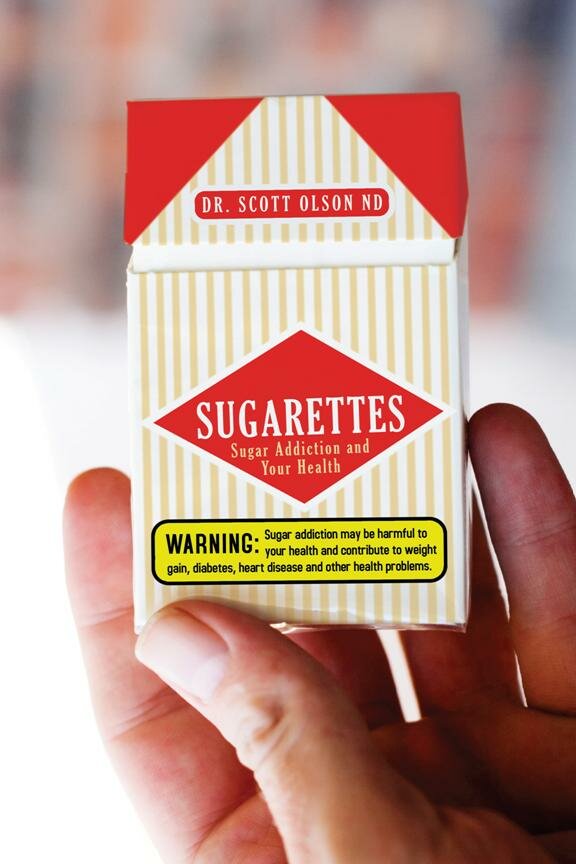
What Sugar Does To Your Brain
By Dr. Scott Olson


brain-derived neurotrophic factor (BDNF). 
Research has shown that high sugar diets (along with high fat diets and lack of essential fatty acids) decrease a BDNF.2 In fact, the relationship between BDNF and sugar gets even more interesting: low amounts of BDNF actually leads to insulin resistance, metabolic syndrome and even diabetes.3 This means that high sugar in the blood leads to low BDNF, and then low BDNF leads to a worsening of blood sugar control, which leads to high blood sugar, which leads to worse blood sugar control… and the cycle continues. You want as much BDNF around as possible if you want to learn, grow, and have normal brain functioning.
Interestingly, there is also a close association with poor blood sugar control (metabolic syndrome) and the severity of schizophrenia:

As a hint that how we live and what we eat have some effect on our moods, it has long been known that coronary heart disease and diabetes all are common in people with depression.8 This means that the same dietary conditions that create heart disease and diabetes also can lead to depression.  Anxiety, too, has been closely linked with sugar use in a number of studies.  [full article here]
_______________________________________________________________


"Sugar and the taste of sweet stimulate the brain by activating beta endorphin receptor sites. These are the same chemicals activated by heroin and morphine.

Fatty foods may cause cocaine-like addiction. Taking drugs such as cocaine and eating too much junk food both gradually overload the so-called pleasure centers in the brain, [according to Paul J. Kenny, Ph.D., an associate professor of molecular therapeutics at the Scripps Research Institute, in Jupiter, Florida.] Eventually the pleasure centers "crash," and achieving the same pleasure—or even just feeling normal—requires increasing amounts of the drug or food, says Kenny, the lead author of the study.   

"Recent behavioral tests in rats further back the idea of an overlap between sweets and drugs. Drug addiction often includes three steps. A person will increase his intake of the drug, experience withdrawal symptoms when access to the drug is cut off and then face an urge to relapse back into drug use. Rats on sugar have similar experiences. Researchers withheld food for 12 hours and then gave rats food plus sugar water. This created a cycle of binging where the animals increased their daily sugar intake until it doubled. When researchers either stopped the diet or administered an opioid blocker the rats showed signs common to drug withdrawal, such as teeth-chattering and the shakes. Early findings also indicate signs of relapse. Rats weaned off sugar repeatedly pressed a lever that previously dispensed the sweet solution." (Leah Ariniello, Brain Briefings, October 2003)
Full article here.
_______________________________________________________________
Click here for the most comprehensive article I've found on sugar and it's effects on mind and body.

Is it too much to ask to take responsibility for our bodies and live better?

Monday, October 25, 2010

Self Examination

I am 31 years of age as of this post. For as long as I can remember I have struggled with a desire to eat desserts for comfort and for fun. Let's face it, food is a huge part of life and culture. At about age 12 I became more interested in physical fitness and began to discover that I had a difficult time leaving sweets alone. For nearly 20 years now I have battled with myself, attempting to eradicate the desire for sweets from my life. If you are not sure if you are addicted to refined sugar (desserts, candy, soda, etc.) I suggest asking yourself a question: Can I walk away from dessert forever and not care? What do you feel? Does it create anxiety? How is your body reacting? What thoughts are coming to your mind? For me, I got to the point that when I asked myself that question I nearly puked with fear and felt very depressed.

Now I'm not saying that eating dessert is an evil, sinful thing. DON'T misunderstand my intention here. What I am saying is that if you 'can't live without it' then refined sugar is destroying your health and retarding your capacity to feel and experience life. We are talking about addiction to refined sugar, not the act of eating it. After all, sugar in and of itself has no intention, is neither evil or good, it just is. It's what we do with it that can create negativity in our lives. I want to explore why it is bad for health in a future post.

So, do you have a problem with refined sugar? I do. It was difficult to admit addiction and even more unpleasant to accept that I have a problem. But, you know, it wont go away on it's own. And I speak from experience that the longer you ignore it and push it away, the worse it will get, especially if life gets stressful for long periods of time.

As part of a self examination here are several other questions to ask yourself:
1. Do you get a small, euphoric high when you eat something packed with refined sugar?
2. Do you eat excessive amounts of refined sugar or salty snacks when you are stressed?
3. What do you do in down time? What are the first thoughts you have when relaxing? Is it 'go to the kitchen or fridge'?
4. Do you make desserts or drink soda to relax or have fun?
5. Have you tried to live without refined sugar (desserts, candy, soda, etc.) without success?
6. Does your body feel awful after eating sugar? (It should whether you're addicted or not! :)
7. Do you have an affinity for sweets?
8. Do you buy lots of sweets? Eat lots of sweets?
9. Can you live without desserts, drinks, etc.?
10. Do you have a problem with yeast infections (candidiasis) of any kind?

I have a problem with sweets and I'm going to beat the problem. Because I want to feel better and have the satisfaction of knowing that I am the captain of my own ship.

Sunday, October 24, 2010

If you're addicted to it, then it's an addiction

Addictions come in all shapes and sizes. I believe that everyone has a tendency or weakness to addiction but that addictions are uniquely personal to each of us. This means that not everyone has the same addiction to the same substance or activity and that each addiction comes from a variety of personal factors. Such factors as culture, biological family history, individual personality type, childhood abuse, life experience, inability to cope with strong emotions and many other factors contribute to what we can become addicted to. But even though there are many substances and activities a person can become addicted to, one thing remains the same: addiction is addiction - no matter what it is to. This means that the steps to overcome and recover from an addiction are fundamentally the same all across the board!

In this blog I will only be dealing with addiction to refined sugar with an occasional mention of salty snacks as well. I decided to create this blog because it's so hard to find free help and advice on the Internet about sugar addiction. I'm just an average Joe, so to speak, and this blog is a catalog of how I am beating sugar addiction. As always, seek medical help before making changes in your lifestyle.