Showing posts with label depression. Show all posts

Monday, February 28, 2011

Laura’s Take: Spiritual Health and Addiction

Carey already did an amazing job defining addiction in the very first blog post called “If you are addicted to it, then it is an addiction.”

Like she said, addiction is unique to the individual. Addiction hides behind many masks. It is something that we may or may not be aware of, if we are; we are most likely ashamed of it. We may feel the need to hide it from those who we care about most or we care about what others think about us. Its repetitive behavior, it robs our time by way of our thoughts, actions and moods. Withdrawal symptoms are inevitable, and we may even miss the behavior like an old friend.

For all of us who have overcome a bad habit, know the difficulty it can be with it returning, and returning with a vengeance. For me it was my depression and weight. After I got married, which was a positive stress, the change from being single to a couple, and a mother of two was an upheaval to the structure that kept me on the right path. That structure was perfected as a single person, but the terrain changed. Like spiritual paralyses I had to relearn the things that kept me strong in the past.

A message by Victor D. Cave had a profound influence on me years ago when I was battling depression. Called:
"Parables of Jesus: The Parable of the Empty House", Ensign, Mar. 2003, 45–47

You might wonder what one of Jesus Christ parables would have to do with addiction. Whether or not you believe in God or the Devil, there IS opposition in all things; Light/Darkness, Good/Bad, etc.

In this message he quotes Spencer W. Kimball

“The devil knows where to tempt, where to put in his telling blows. He finds the vulnerable spot. Where one was weak before, he will be most easily tempted again.

“In abandoning sin one cannot merely wish for better conditions. He must make them. … He must eliminate anything which would stir the old memories.

“Does this mean that the man who has quit smoking or drinking or had sex pollutions finds life empty for a time? The things which engaged him and caught his fancy and occupied his thoughts are gone, and better substitutions have not yet filled the void. This is Satan’s opportunity. The man makes a start but may find the loss of the yesterday’s habits so great that he is enticed to return to his evil ways, and his lot thus becomes infinitely worsened. …

“Many who have discontinued bad habits have found that substitution is part of the answer, and have conquered a bad habit by replacing it with a good or harmless one.” (The Miracle of Forgiveness (1969), 171–73.)

“True repentance (or putting off an addiction) is not merely eliminating the negative but replacing it with positive attitudes and actions.”

The parable of the Empty House is found in the New Testament, Matt. 12:22-37 and also can be found in that article in more clarity. To be honest I didn’t understand it reading it through the first time. It took several times and allot of prayer and study. I felt it held answers for me so I was driven to understand it. It had such a profound effect on me that several years later I did a sort of a diptych of the parable.

The second painting was to symbolically show a “full” house. We are vessels that must be full at all times. We choose what to fill our vessels with.


So what can we replace our bad habits with?

It will be different for everyone, just like our weaknesses and addictions are varied. Our strengths are varied too. We can’t afford to be idle. That is when we can be caught off guard. For me filling me life with more prayer, fasting, scripture study, service, yoga, meditation, work, painting along with other hobbies etc., helped me a great deal. Avoiding people or places that would potentially bring me down, like an alcoholic would avoid a bar, I had to avoid certain things that would trigger my eating or depression.


If you look within yourself, you can find many wholesome things to replace the time spent being less edified. It is good to have a plan so you can fall back on it during weak moments. I can confirm that it does get easier as we persist. Because that which we persist in doing becomes easier, not because the nature of the thing has changed, but because our ability to do it has increased. (Ralph Waldo Emerson) And with God’s help, anything is possible.

Thursday, November 25, 2010

Giving Thanks

Happy thanksgiving to you all. Today I felt like I should do a message on gratitude which is a powerful aspect of positive thinking. This might be more for me than anyone else. Sometimes I need to remind myself of the goodness of God. Maybe you are wondering what this has to do with sugar :) Well, depression can be a trigger for me to give in and have something sweet to “release” me from the pain.

Holidays can be a trigger for me to, not because there are allot of sweets, but because I miss my parents so much. This will be their 5th Thanksgiving they have been away from home. They have been in Africa serving the Lord. And they won’t be back until after they have missed their 6ths consecutive Thanksgiving (not to mention Christmas) home.

I was reminded the other night of the impact our negative thoughts can have on our brain. I may not agree 100 percent with what Dr. Amen has to say, but I feel like he can be a great resource. Follow this link for more info. This first quote is from that link.

“The thoughts that go through your mind, moment by moment, have a significant impact on how your brain works. Research by Mark George, MD and colleagues at the National Institutes of Health demonstrated that happy, hopeful thoughts had an overall calming effect on the brain, while negative thoughts inflamed brain areas often involved with depression and anxiety. Your thoughts matter.”

Dr. Amen has a clever acronym for negative thoughts, “ANTs” (or Automatic Negative Thoughts)

Quoting a paragraph from his book, “Change your brain change your life.”

Our overall mind state has a certain tone or flavor based largely on the types of thoughts we think. When the deep limbic system is overactive, it sets the mind's filter on "negative." If you could look into the thoughts of people who are depressed, you would find one dispiriting thought following another. When they look at the past, there is regret. When they look at the future there is anxiety and pessimism. In the present moment, something is most often unsatisfactory. The lens through which they see themselves, others, and the world has a dim grayness to it. They are suffering from Automatic Negative Thoughts, or ANTs. ANTs are cynical, gloomy, and complaining thoughts that just seem to keep coming all by themselves.

(to read a section from his book click this link)

Here is a summary of the “ANTs”

1. "Always" thinking: thinking in words like always, never, no one, every one, every time, everything.
2. Focusing on the negative: only seeing the bad in a situation.
3. Fortune telling: predicting the worst possible outcome to a situation.
4. Mind reading: believing that you know what another person is thinking, even though they haven't told you.
5. Thinking with your feelings: believing negative feelings without ever questioning them.
6. Guilt beatings: thinking in words like "should, must, ought or have to."
7. Labeling: attaching a negative label to yourself or to someone else.
8. Personalization: innocuous events are taken to have personal meaning.
9. Blame: blaming someone else for your own problems.

That was me, and in moments of relapse it is me again, if I am not careful or use my “ANT eaters”

Feed Your Anteater and Feel Better

Whenever you notice an ANT entering your mind, train yourself to recognize it and write it down. When you write down automatic negative thoughts (ANTs) and talk back to them, you begin to take away their power and gain control over your moods. Kill the ANTs by feeding your emotional anteater.

FEED YOUR ANTEATER AND FEEL BETTER EXERCISE is for whenever you need to be in control of your mind. It is for times when you feel anxious, nervous, depressed or frazzled. It is for times when you need to be your best.

Here are some examples of ways to kill these ANTs:

ANT / Species of ANT / Kill the ANT

You never listen to me. / 'Always Thinking' / I get frustrated when you don't listen to me,
but I know you have listened to me and will again.

The boss doesn't like me. / 'Mind Reading' / I don't know that. Maybe she's just having a bad day.
Bosses are people, too.

The whole class will laugh at me. / 'Fortune Telling' / I don't know that. Maybe they'll really like my speech.

I'm stupid. / 'Labeling' / Sometimes I do things that aren't too smart,
but I'm not stupid.

It's your fault we have these marital problems. / 'Blame' / I need to look at my part of the problems and look for ways I can make the situation better.

Getting back to gratitude, this talk was given at our most recent General Conference from our wonderful Prophet:

“We can lift ourselves and others as well when we refuse to remain in the realm of negative thought and cultivate within our hearts an attitude of gratitude. If ingratitude be numbered among the serious sins, then gratitude takes its place among the noblest of virtues. Someone has said that ‘gratitude is not only the greatest of virtues, but the parent of all others.’ Cicero, in A New Dictionary of Quotations on Historical Principles, sel. H. L. Mencken (1942), 491.

“When we encounter challenges and problems in our lives, it is often difficult for us to focus on our blessings. However, if we reach deep enough and look hard enough, we will be able to feel and recognize just how much we have been given.”

Lets help each other this holiday season to see how richly blessed we really are. Approaching life with an attitude of gratitude will not only bless our lives, but lift those around us.

Monday, November 15, 2010

Sugar: Emotions

What we eat, good or bad, has an effect not only on our physical health but also our mental health.  For example, a hungry individual is more likely to be irritable and easily frustrated.  Refined sugar is especially devastating due to it’s effect on insulin.  Insulin imbalance is associated with depression, anxiety and frustration.  Less talked about are the effects of food on emotions.  It is obvious that emotions affect the way we eat if we aren’t aware of whats going on.  How many times were you stressed and thought a donut or soda would lift your spirits?  My personal favorite was Oreo’s and milk.

Isn’t that why we are addicted to sugar anyway- to regulate or change a mood?  This is an incredibly dangerous practice as it sets up the groundwork for a cycle of sugar addiction.  Stress –> response: eat for comfort –> Insulin surge –> response: physical fatigue –> eat for energy (usually more sugar) -> let down as sugar effect dissipates -> More stress -> and on and on.

The Limbic system is the most primitive part of the brain.  This is where emotions are both stored and generated.  When addiction is present it is no longer reacting clearly.  “For instance, when we eat chocolate, notes the National Institute for Drug Abuse, we may feel a noteworthy amount of pleasure (via the limbic system), leading us to repeat the behavior. Unfortunately, repeating this action for the sake of pleasure and using this habit to cope with daily life can create a cycle of not only crashing blood sugar, but frustration.”  Click here for complete article.

Giving into addiction is essentially allowing the substance you are addicted to take care of the uncomfortable emotion for you.  Stress, anger, anxiety – all emotions typically avoided by addicts.  It is my belief and experience that if you want to overcome an addiction, you have to face your troubles.  You can no longer run from what is upsetting you.  Negative emotions can be very frightening because they are usually associated with mental thoughts and ideas or perceptions.  If I perceive that my boss is a real jerk to me, naturally my thoughts instruct my brain to feel either anger or fear.  If I don’t feel capable of dealing with the anger or fear what happens in my body?  The chemicals (hormones) that my brain generated in response to the stress are stored in fatty tissue or the body attempts to eliminate the excess through the waste process.  If my body is already in overdrive trying to compensate for sugar overload then eventual illness will result.  All because I chose to allow sugar to deal with my boss instead of being responsible for myself.  Sadly, when anger or fear isn't dealt with it often becomes shame and self loathing.
I believe (from my own experience) that emotional dependence on a substance facilitates an inability to see life as it really is. I feel that it makes problems worse, not better or easier because it keeps us from growing through an experience.  A problem rarely goes away if we choose not to deal with it.  Usually the problem is always there and more problems start to heap up when we choose to ignore or hide from them.  (In a future post I will talk more about emotional intelligence).

It's actually easier to cope with emotions when an outside chemical isn't influencing hormones and the brain.  As sweet as sugar is, it does not make life sweet.  The only thing that can make life sweet is what comes from within us.  Self respect, positive attitude and a desire to do what's right.


    Monday, November 8, 2010

    Physical Aspects: What Sugar Does to Your Brain

    I've known for a long time that refined sugars made me 'feel good'.  The older I got the more stress entered life and my sugar consumption began a steady increase while my health began a steady decrease.  I got to the point that I could eat candy or some kind of junk food, stand in the kitchen and literally feel the subtle wave of calming and euphoria hit me.  Humiliating and enslaving, disgusting and pathetic to need something like that to feel happy in life or to cope. 

    It's important to remember that the more a substance is refined the less nutrition it has and it takes on a basic chemical form.  Why is this of interest?  Sugar in it's bleached and refined state leeches a multitude of vitamins and minerals from the body in order for the body to process it.  [Dr. David Reuben, author of Everything You Always Wanted to Know About Nutrition says,] “…white refined sugar-is not a food. It is a pure chemical extracted from plant sources, purer in fact than cocaine, which it resembles in many ways."

    There are many scientists and doctors that scoff at people who claim to have sugar addiction.  In fact there are not a lot of studies to back it up or disprove it.  I don't think it takes a scientist to tell any of us that sugar is addictive.  This article pulls form several websites and studies about the effects of sugar on the brain and mental capacity.

    As a disclaimer, I DO NOT advocate extreme dieting or diets that aren't based on moderation.   I don't agree with every thing on these sites but there is some good information to filter through.
      _______________________________________________________________

    Keeping Your Brain Healthy by Dr. Patsi Krakroff
    When you have an elevated blood-sugar level, you elevate your insulin level. You also elevate your stress hormones, which follows right behind your blood sugar. These are all capable of causing inflammatory responders to go into high gear in the body. This can damage the mitochondria of the cells, which are our main cellular energy-producers.

    When the mitochondria are damaged by constant elevation of blood sugar, especially if you are overweight, this may cause a pre-diabetic or diabetic condition. When the mitochondria are damaged, the nerve cell deteriorates and dies. This is why sugar addicts experience fatigue.

    Daily drinkers of alcohol are particularly prone to brain damage as they age. Since alcohol is processed as sugar…

    Artificial sweeteners are not the solution. They can cause headaches, migraines and attention difficulties.  [Full article here]
    _______________________________________________________________

    What Sugar Does To Your Brain
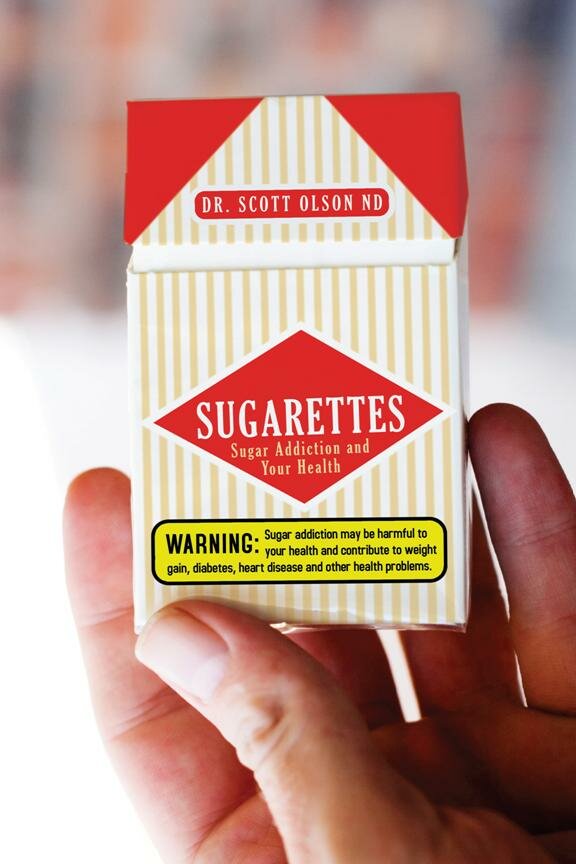
    By Dr. Scott Olson


    brain-derived neurotrophic factor (BDNF). 
    Research has shown that high sugar diets (along with high fat diets and lack of essential fatty acids) decrease a BDNF.2 In fact, the relationship between BDNF and sugar gets even more interesting: low amounts of BDNF actually leads to insulin resistance, metabolic syndrome and even diabetes.3 This means that high sugar in the blood leads to low BDNF, and then low BDNF leads to a worsening of blood sugar control, which leads to high blood sugar, which leads to worse blood sugar control… and the cycle continues. You want as much BDNF around as possible if you want to learn, grow, and have normal brain functioning.
    Interestingly, there is also a close association with poor blood sugar control (metabolic syndrome) and the severity of schizophrenia:

    As a hint that how we live and what we eat have some effect on our moods, it has long been known that coronary heart disease and diabetes all are common in people with depression.8 This means that the same dietary conditions that create heart disease and diabetes also can lead to depression.  Anxiety, too, has been closely linked with sugar use in a number of studies.  [full article here]
    _______________________________________________________________


    "Sugar and the taste of sweet stimulate the brain by activating beta endorphin receptor sites. These are the same chemicals activated by heroin and morphine.

    Fatty foods may cause cocaine-like addiction. Taking drugs such as cocaine and eating too much junk food both gradually overload the so-called pleasure centers in the brain, [according to Paul J. Kenny, Ph.D., an associate professor of molecular therapeutics at the Scripps Research Institute, in Jupiter, Florida.] Eventually the pleasure centers "crash," and achieving the same pleasure—or even just feeling normal—requires increasing amounts of the drug or food, says Kenny, the lead author of the study.   

    "Recent behavioral tests in rats further back the idea of an overlap between sweets and drugs. Drug addiction often includes three steps. A person will increase his intake of the drug, experience withdrawal symptoms when access to the drug is cut off and then face an urge to relapse back into drug use. Rats on sugar have similar experiences. Researchers withheld food for 12 hours and then gave rats food plus sugar water. This created a cycle of binging where the animals increased their daily sugar intake until it doubled. When researchers either stopped the diet or administered an opioid blocker the rats showed signs common to drug withdrawal, such as teeth-chattering and the shakes. Early findings also indicate signs of relapse. Rats weaned off sugar repeatedly pressed a lever that previously dispensed the sweet solution." (Leah Ariniello, Brain Briefings, October 2003)
    Full article here.
    _______________________________________________________________
    Click here for the most comprehensive article I've found on sugar and it's effects on mind and body.

    Is it too much to ask to take responsibility for our bodies and live better?

    Thursday, November 4, 2010

    Laura’s Take: The Power of Positive thinking; helping us achieve our Healthy Habits

    Sow a thought, and you reap an act; Sow an act, and you reap a habit; Sow a habit, and you reap a character; Sow a character, and you reap a destiny” ~Charles Reade

    From my previous post I spoke about my struggle with depression and anxiety. During the time I was serving an LDS mission was when I began to reap new habits and it all began with positive thinking.

    In the second letter from my bishop he wrote: “As a ‘confession,’ I used to really dislike being told to have a ‘PMA’ (positive mental attitude) and similar things, probably because it seemed trite and somewhat ‘cheer-leaderish.’ However, now I realize it isn’t so trite at all. Indeed, it is a precursor to exercising true faith.”

    I had felt the same way. All throughout Jr. High School and High School I looked down on positive people. I felt they were ignorant to the real suffering and pain in the world. Looking back, I was the ignorant one.

    I began collecting positive quotes like an entomologist collects butterflies during this time of transition. I feel like I should share two of my favorites. The first is called “If”


    IF

    If you think you are beaten, you are.
    If you think you dare not, you don't.
    If you'd like to win, but think you can't,
    It's almost a cinch you won't.

    If you think you'll lose, you've lost.
    For out of the world we find

    Success begins with a fellows’ will.
    It's all in the state of mind.

    If you think you're outclassed, you are.
    You've got to think high to rise.
    You've got to be sure of yourself
    Before you can win the prize.

    Life's battles don't always go
    To the stronger or faster man,
    But soon or late the man who wins
    Is the man who thinks he can.

    ~ Anonymous

    “The Eternal Everyday” by Edmund Vance Cooke (fragment)

    “…O, one might reach heroic heights
    By one strong burst of power.
    He might endure the whitest lights
    Of Heaven for an hour;–
    But harder is the daily drag,
    To smile at trials which fret and fag,
    And not to murmur – nor to lag.
    The test of greatness is the way
    One meets the eternal Everyday.”

    I put that last poem to memory and I would recite it in my mind or with those I visited. It was a source of great comfort to me. (I found it while reading the Ensign: Quentin L. Cook, “Looking beyond the Mark,” Ensign, Mar 2003, 40–44)

    Our thoughts have power for good or ill. I have felt this very literally in my life. For an example of the literal power of pray/positive thinking can be found in an account by Dr. W. Jerome Stowell I read after I came home from mission. It is a bit lengthy so I won’t post it here, but you can read the account at this
    link.


    A small summary of the story is about a group of scientists looking for a way to measure the electrical charges in the brain during the transition of dying to death. On this measuring device they had measured the power used by a 50,000 watt broadcasting station sending a message around the world at nine points on the positive scale. They then measured a dying woman (they could hear what she was saying during her last hours) as she prayed. They didn’t have an instrument strong enough to register the positive number, it was higher than the 500 positive points on their scale. This had a similar but opposite effect as they measured a man who was more bitter and angry.

    Our very thoughts have the power to propel us to our dreams or our nightmares. They have a real affect on our attitudes and our health. If we want positive changes in our lives we need to feed our minds with pure, uplifting, edifying activities. Through our own actions and the aid from our Father above we can achieve anything we set our mind to. “Sow a thought, and you reap an act; Sow an act, and you reap a habit; Sow a habit, and you reap a character; Sow a character, and you reap a destiny”

    Friday, October 29, 2010

    Laura's Take: Combatting Stress with Spiritual Power

    Almost eight years ago I began an ecclesiastical mission for the Church of Jesus Christ of Latter-day Saints.  I served for 19 months, putting aside family, friends, hobbies, college and work to serve in Maryland.  This was the desire of my heart since I was 9 years old, to share the glad message of the Gospel of Jesus Christ.  Though this gospel had brought me a great deal of comfort and joy, I had suffered from depression for several years and was taking medication to deal with the anxieties that resulted from it.  When I got to the mission field I encountered allot of new situations and stresses that became nearly debilitating.  I had served for about four months when I found out a dear woman I had taught had passed away.  It was a hard blow, and hand phoned my mission president in tears.  I was shocked when he said I should consider going home.  I knew I couldn’t go home so I sought counsel from my home ward bishop.
     When my bishop spoke with me, he could tell I had a lot of feelings of stress and anxiety.  He told me that some of those feelings had to do with the every-day experiences and life of a missionary.  He then told me that most of them seemed to be centered in perceived feelings of inadequacy or fears that I might not be able to do everything that I should.
     He went on to explain of his conviction that some of Satan’s greatest tools are discouragement and depression. “Negative emotions such as depression, anxiety, doubts, fears, etc. can be just as effective at driving the Spirit away from us as conscious sin.
    Just as with doubt and fear, any other negative emotion such as depression, anxiety, etc. can drive the Spirit out of our lives and cause us to “sink.”  (Think of Peter participating in a great miracle of walking on water, Matt. 14:29-30).  Remember, “where doubt [or fear, or anger, or depression, or anxiety] is, faith cannot be.”
     He helped me discover a fallacy I had believed in for years, that depression was the same as humility.  And that I was putting too much trust in my own efforts and not relying on the Lord. To quote my Bishop:
     “Making flesh our arm” refers to relying upon our own efforts and abilities.  When we doubt we are simply relying upon our own intellect to address or consider a dispute.  When we fear, we are relying upon our own understanding or intellect to judge or assess a situation”
     “By definition, the weaknesses which are given to us cannot be overcome by our individual efforts, no matter how hard we work, or it would not make us humble.  Indeed, it would have just the opposite effect and make us proud that we had overcome the weakness on our own!

    Then is given one of the greatest of all the promises in the scriptures:  “for if they humble themselves before me, and have faith in me, then will I make weak things become strong unto them.”  I have emphasized the word “I” because it is the Lord who will make you strong and lift your burdens. “
    Because of the lengthiness of the letter, these are the steps my bishop set up to help me overcome the severe anxiety I was experiencing.
    ·        Recognize the negative emotion .  It is alright to feel unworthy, weak and inadequate. However, after we have made that acknowledgment, it is NOT alright to stay that way or to let it affect our life.
    ·        Don’t dwell on the negative emotion.  Quickly cast out such damaging and negative thoughts.
    ·        Pray for the Lord’s help in overcoming the stress.  The weaknesses which are given to us cannot be overcome by our individual efforts.
    ·        Finally, know that putting these principles into effect will take time and significant effort.
    Like my bishop said, it would take time and effort to put these things into practice.  I find that when I am up against some major change and stress that I haven’t encountered before, like marriage, pregnancy, childbirth, etc. I have to go through the same process that I went through over 7 years ago.  This works for any weakness, any problem.  The gospel of Jesus Christ is so perfect in its simplicity and so beautiful in its universality.  Yes we are all unique and have our own special circumstance and belief systems but we are all the same in that we are all children of a loving God.  And his council works for all of us.

    View the actual letter by clicking here or choosing the link on the sidebar.